Ask people who have been part of a church for a long time what made the difference in their faith, and you will often hear the same answer: my group. Not a sermon, not a program, not a building — a handful of people who knew their name, prayed for them, showed up with dinner when life fell apart and celebrated when God came through. At Northeast Community Church we say it this way: real life change happens when we are engaged in authentic relationships. That is why LifeGroups are the heart of our church.
Yet joining a small group can feel daunting. Will it be awkward? Will I have to pray out loud? Will these people be my kind of people? This guide answers those questions and offers practical steps for finding a group where you can genuinely belong.
Why small groups matter so much
The earliest Christians didn’t simply attend a weekly gathering. Acts 2:42–47 describes believers who “continued steadfastly in the apostles’ teaching and fellowship, in the breaking of bread, and prayer,” meeting in the temple courts and in homes. Their faith was lived out around kitchen tables. Much of the New Testament’s “one another” language — love one another, bear one another’s burdens, encourage one another, confess your sins to one another — only works in relationships close enough to know what those burdens and sins actually are.
A Sunday gathering is wonderful for worship and teaching, but it is hard to be truly known in a room full of rows. A small group fills that gap. Here are four things groups do that large gatherings simply can’t:
- Conversation, not just content. You get to ask questions, push back and hear how others apply Scripture to their lives.
- Care. When someone loses a job, gets a diagnosis or welcomes a baby, the group mobilizes. Most pastoral care in a healthy church happens through groups.
- Accountability. Growth happens when trusted friends ask how you are really doing — and you answer honestly.
- Mission. Groups often serve together, turning faith into action in the community.
Loneliness has become a major public-health concern in the United States. A small group is one of the simplest, most consistent ways to build friendships as an adult — especially in a busy commuter region like Fairfield County.
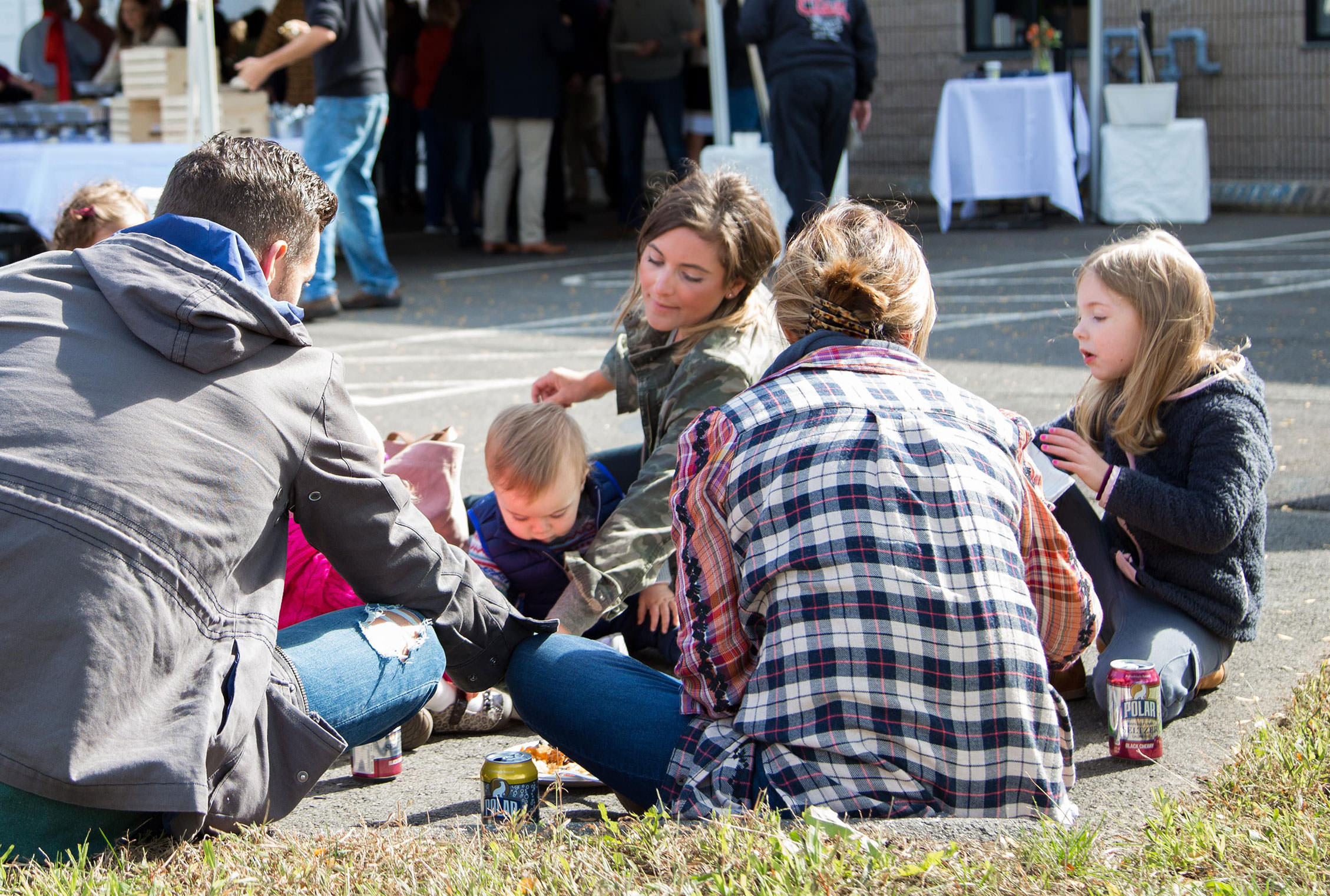
What actually happens in a LifeGroup
Every group has its own personality, but most NECC LifeGroups follow a similar rhythm over about two hours:
- Food and catching up (30–40 minutes). Many groups share a simple meal or snacks. This is where friendships form.
- Discussion (40–50 minutes). The group discusses the Sunday message or a Bible passage using a set of questions. Nobody is quizzed, and you never have to read aloud or answer if you’d rather listen.
- Prayer (20–30 minutes). People share what is going on in their lives and pray for one another. Praying out loud is always optional.
Some weeks look different: a service project, a game night, a summer barbecue. The goal is not a perfect Bible study but a community following Jesus together.
What to look for in a group
There is no such thing as a perfect group, but some factors make a good fit more likely.
Practical fit
Start with logistics. A group you can’t realistically attend won’t help you, no matter how great it is. NECC currently offers groups on Tuesday evenings (Old Greenwich/Westport), Thursday evenings (Norwalk), Friday evenings (Norwalk/Wilton/Fairfield) and Saturday mornings (online). Consider your commute, childcare and work schedule.
Stage of life — but not only stage of life
It is natural to look for people in a similar season — young parents, empty-nesters, young professionals. That shared context helps. But some of the richest groups are mixed: a retired couple who can encourage new parents, a college student who brings fresh energy. Be open to people who are not exactly like you.
A healthy culture
Watch for a group where the Bible is taken seriously, where people listen as much as they talk, where newcomers are welcomed and where confidentiality is respected. A healthy group feels safe enough to be honest and warm enough to keep coming back.
Getting through the awkward first weeks
Let’s be honest: the first few meetings of any new group can feel awkward. You don’t know the inside jokes, you are not sure how much to share and you may wonder whether you fit. This is normal, and it passes. A few tips:
- Commit to four weeks. Decide in advance that you will attend at least four times before evaluating. Relationships need repetition.
- Arrive a few minutes early. One-on-one conversations before the group starts are easier than jumping into a crowd.
- Ask questions. People love to be asked about their story. Curiosity is the fastest path to connection.
- Share a little, then a little more. You don’t need to unload your life story on night one. Trust is built in layers.
- Offer to help. Bring a dessert, help clean up, host one evening. Contributing turns a guest into a member.

Common obstacles (and how to overcome them)
“I’m too busy.”
Fairfield County schedules are packed. But consider: what would it be worth to have a handful of people who truly have your back? Many people find that a group actually makes life feel less overwhelming. If evenings are impossible, our Saturday morning online group may work.
“I’m an introvert.”
Groups are often a better fit for introverts than big crowds. You can listen more than you speak, and depth of conversation tends to energize rather than drain. Let your leader know you prefer to warm up slowly.
“I don’t know the Bible well.”
Perfect — a group is the ideal place to learn. Nobody expects you to be an expert, and your honest questions often help others too.
“I tried a group before and it didn’t work.”
Every group is different. Tell us what didn’t work last time, and we’ll help you find a better fit.
When you’re ready to lead
Many of our current group leaders never imagined they would lead anything. They simply started by hosting, then helped facilitate discussion, then stepped into leadership with training and support. If you sense a nudge toward hospitality or shepherding, talk to us. Leading a group is one of the most meaningful ways to serve.
Key takeaways
- Small groups provide conversation, care, accountability and mission that Sunday alone can’t.
- A typical LifeGroup includes food, discussion and optional prayer over about two hours.
- Choose a group based on practical fit first, then openness to people unlike you.
- Commit to at least four weeks before deciding — the awkwardness passes.
- NECC groups meet Tuesday, Thursday, Friday and Saturday (online).
Ready to take the step? Tell us which nights work for you, and we’ll connect you with a LifeGroup this month.
Frequently asked questions
Most LifeGroups have between 8 and 15 people, small enough to know each other but large enough for great conversation.
Most meet weekly or every other week, usually for about two hours including food and prayer.
Yes. We encourage people to visit a group for three or four weeks before deciding.